Supply Chain & Fulfillment AI
Fishbowl
Fishbowl is an inventory and manufacturing operations platform for warehouse and production teams that need to manage stock, purchasing, orders, bills of materials, and work orders together. It separates inventory operations from manufacturing needs, which helps a buyer avoid paying for production controls they do not use.
- Platforms
- Shopify · Custom API
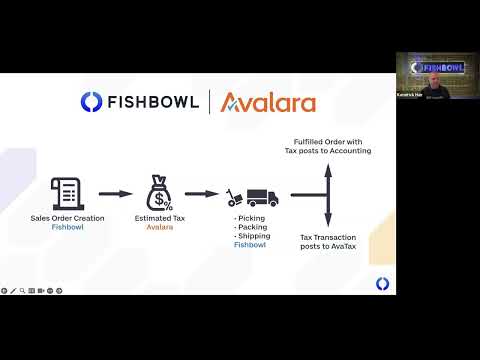 Official videoWebinar | Fishbowl and Avalara: How Product Based Businesses Are Handling Sales Tax in 2026Click to play · Fishbowl
Buying view: It separates inventory operations from manufacturing needs, which helps a buyer avoid paying for production controls they do not use. Inventory plans do not include manufacturing functions such as BOMs and work orders. Confirm that the selected product and deployment fit the physical operation before migrating.
Capabilities
Fishbowl connects inventory, purchasing, order fulfilment, warehouse scanning, accounting integrations, and optional manufacturing work so product businesses can control physical stock beyond a basic storefront. Its biggest advantage is operational depth without adopting a broad ERP: warehouse and manufacturing teams can trace materials, finished goods, orders, and costs while continuing to use systems such as QuickBooks or Xero.
What problem it addresses
Physical-goods operations need warehouse and inventory control that can extend into manufacturing when storefront stock tools are no longer enough.
How people use it
Inventory workflows for stocked and resold goods. Barcode scanning and reorder-point controls. Multi-warehouse and multichannel operational support.
A sales order reserves available stock, warehouse staff pick and pack with barcode support, shipment is confirmed, and inventory and accounting records update.
Reorder points or planning reveal shortages, the team reviews an automatically prepared purchase order, receives the goods, and replenishes available stock.
A manufacturing order uses a bill of materials, allocates components and work, records consumption and completion, and adds finished goods to inventory.
What each module does and its role
Inventory workflows
Inventory workflows for stocked and resold goods. Warehouse operators use the stock record to receive, adjust, and allocate resold inventory and fulfill related orders.
Barcode and reorder controls
Barcode scanning and reorder-point controls. Barcode scans record physical stock movement, while reorder points identify items that need replenishment attention.
Warehouse and channel operations
Multi-warehouse and multichannel operational support. Operations teams use the shared system to coordinate inventory quantities across warehouses and connected sales channels.
Manufacturing product
Separate manufacturing product path for BOM and work-order needs. That path turns component requirements into managed production workflows rather than treating the business as a resale-only inventory operation.
Commercial plans
This table reflects the current public pricing surface checked on 2026-09-03. Each row keeps the plan's documented allowances, capabilities and separately priced add-ons together so the tiers can be compared without treating the headline price as the whole offer.
Fishbowl product pricing
| Product or sales surface | Scope | Public price and status |
|---|---|---|
| Fishbowl Inventory | For businesses that buy, stock and resell finished goods. Included plan entitlements
| From $229/month billed annually |
| Fishbowl Advanced | For manufacturing, multi-warehouse, 3PL or EDI-driven operations. Included plan entitlements
| From $595/month |
Comparable tools: price and workflow
| Tool | Workflow difference | Official public price reference |
|---|---|---|
| Katana | The brand makes or assembles products and needs inventory decisions to connect with BOMs, work orders, or warehouse execution. Confirm manufacturing modules, data model, deployment, and channel synchronization rather than assuming an inventory plan covers production. | $0 |
| Cin7 | Inventory, orders, purchasing, and multiple selling channels need to share one operating system. Migration, SKU and location definitions, integrations, permissions, and exception handling matter more than a feature checklist. | $349/month |
| Finale Inventory | Multi-channel order flow, inventory availability, routing, and fulfillment exceptions have outgrown manual coordination. Use a test account to validate channel mapping, order states, write permissions, oversell handling, and migration effort. | From $499/month |
| Extensiv Order Manager | Multi-channel order flow, inventory availability, routing, and fulfillment exceptions have outgrown manual coordination. Use a test account to validate channel mapping, order states, write permissions, oversell handling, and migration effort. | Custom quote |
| Netstock | Forecasting, replenishment, stock cover, and purchase planning are the main need on top of an existing store or inventory system. Forecast quality depends on clean sales, SKU, lead-time, supplier, and promotion data, with a planner retaining override control. | Contact sales |
Frequently asked questions
How does Fishbowl fit into an ecommerce workflow?
Warehouse teams receive and track stock with barcode and reorder controls, coordinate connected channels, and add manufacturing work only when the operation requires it.
How is Fishbowl priced?
The public price references shown here are Fishbowl Inventory: from $229/month billed annually; Fishbowl Advanced: from $595/month.
What is the main Fishbowl boundary to check?
Inventory plans do not include manufacturing functions such as BOMs and work orders. Confirm that the selected product and deployment fit the physical operation before migrating.
Sources
Content checked: