
方法与优势
先明确视觉方向,再一起决定版式、颜色和字体,减少各个元素各自好看却互不协调的问题。运营在提出需求时可以说明最重要的信息和使用场景,让画面围绕主信息建立清晰的阅读顺序。
把活动主题、受众、尺寸和已确认可用的素材转成完整的 AI 海报设计或静态品牌画面。Canvas Design 会先确定视觉方向,再安排构图、字体和文字层级,输出 PNG 或 PDF,适合制作店铺活动海报、品牌展示和需要少量文字配合视觉表达的宣传素材。
Canvas Design 是生成设计文件的工作流程,不是 Canva 网站的连接工具。它要求助手先确定设计理念,再围绕这个方向安排画面,并进行细节修整,让颜色、字体、留白和文字内容形成一致的表达。
适合需求明确、需要导出图片或 PDF 的静态设计任务。原始流程强调控制文字量,因此更适合传达一个清晰主题的海报或品牌画面;如果需要复杂的商品参数表或可编辑店铺页面,应选择对应的排版与开发工具。
先明确视觉方向,再一起决定版式、颜色和字体,减少各个元素各自好看却互不协调的问题。运营在提出需求时可以说明最重要的信息和使用场景,让画面围绕主信息建立清晰的阅读顺序。
交付前还有构图与字体细节的修整步骤,最终得到 PNG 或 PDF 文件。安装时应保留配套字体及其许可信息;使用前按照实际展示或打印尺寸检查导出文件,确认文字可读、边缘完整、关键内容没有被裁切。
视觉简报、尺寸、目标受众、获批文字与素材,以及能生成文件的创意 Agent。
使用能发现已安装 Skill 并读取辅助文件的兼容 Agent。外部服务或创作运行环境需另行配置。
它不是 Canva 集成或可编辑店铺搭建器。需保留随包字体及各自许可,产出仍需目视检查。
将指令复制给 Codex 或 Claude Code,让助手从原始仓库下载固定提交,安装完整文件并检查所需依赖。
请在我当前使用的应用中安装 canvas-design,直接执行文件安装,不要只解释步骤。

原始仓库:https://github.com/anthropics/skills.git
固定提交:dbd4588f9e1033efb41dad4bef2f7947c8993d44
Skill 路径:skills/canvas-design

1. 将这个版本下载到新目录。执行随包脚本前,先阅读 SKILL.md 和安装参考文件,不替换成其他作者的包。
2. Codex 安装到 ~/.agents/skills/canvas-design,Claude Code 安装到 ~/.claude/skills/canvas-design,只安装到我正在使用的应用。安装完整 Skill 文件夹,保留 scripts、references、assets 和随包声明;将仓库根目录许可证一并保留。先检查所有目标目录;已有安装时,说明差异后再决定是否替换。
3. 比较来源和安装目录的文件清单、文件哈希,检查文档要求的运行时、依赖及外部连接。只配置此 Skill 所需的本地依赖,适用时使用隔离环境;账号登录由我在本地完成,不把凭据贴进聊天。
4. 返回来源提交、实际安装路径、文件检查结果及尚未完成的运行环境配置,说明如何调用 canvas-design。文件复制与应用发现分别检查,需要时新建会话。不要执行生产任务,也不要把安装完成说成已确认业务效果。以下为已核对版本未经改写的 SKILL.md。安装完整包才能保留引用的脚本、素材和指引。下方启动提示词为 EcomAgentTools 编写的示例。
---
name: canvas-design
description: Create beautiful visual art in .png and .pdf documents using design philosophy. You should use this skill when the user asks to create a poster, piece of art, design, or other static piece. Create original visual designs, never copying existing artists' work to avoid copyright violations.
license: Complete terms in LICENSE.txt
---

These are instructions for creating design philosophies - aesthetic movements that are then EXPRESSED VISUALLY. Output only .md files, .pdf files, and .png files.

Complete this in two steps:
1. Design Philosophy Creation (.md file)
2. Express by creating it on a canvas (.pdf file or .png file)

First, undertake this task:

## DESIGN PHILOSOPHY CREATION

To begin, create a VISUAL PHILOSOPHY (not layouts or templates) that will be interpreted through:
- Form, space, color, composition
- Images, graphics, shapes, patterns
- Minimal text as visual accent

### THE CRITICAL UNDERSTANDING
- What is received: Some subtle input or instructions by the user that should be taken into account, but used as a foundation; it should not constrain creative freedom.
- What is created: A design philosophy/aesthetic movement.
- What happens next: Then, the same version receives the philosophy and EXPRESSES IT VISUALLY - creating artifacts that are 90% visual design, 10% essential text.

Consider this approach:
- Write a manifesto for an art movement
- The next phase involves making the artwork

The philosophy must emphasize: Visual expression. Spatial communication. Artistic interpretation. Minimal words.

### HOW TO GENERATE A VISUAL PHILOSOPHY

**Name the movement** (1-2 words): "Brutalist Joy" / "Chromatic Silence" / "Metabolist Dreams"

**Articulate the philosophy** (4-6 paragraphs - concise but complete):

To capture the VISUAL essence, express how the philosophy manifests through:
- Space and form
- Color and material
- Scale and rhythm
- Composition and balance
- Visual hierarchy

**CRITICAL GUIDELINES:**
- **Avoid redundancy**: Each design aspect should be mentioned once. Avoid repeating points about color theory, spatial relationships, or typographic principles unless adding new depth.
- **Emphasize craftsmanship REPEATEDLY**: The philosophy MUST stress multiple times that the final work should appear as though it took countless hours to create, was labored over with care, and comes from someone at the absolute top of their field. This framing is essential - repeat phrases like "meticulously crafted," "the product of deep expertise," "painstaking attention," "master-level execution."
- **Leave creative space**: Remain specific about the aesthetic direction, but concise enough that the next Claude has room to make interpretive choices also at a extremely high level of craftmanship.

The philosophy must guide the next version to express ideas VISUALLY, not through text. Information lives in design, not paragraphs.

### PHILOSOPHY EXAMPLES

**"Concrete Poetry"**
Philosophy: Communication through monumental form and bold geometry.
Visual expression: Massive color blocks, sculptural typography (huge single words, tiny labels), Brutalist spatial divisions, Polish poster energy meets Le Corbusier. Ideas expressed through visual weight and spatial tension, not explanation. Text as rare, powerful gesture - never paragraphs, only essential words integrated into the visual architecture. Every element placed with the precision of a master craftsman.

**"Chromatic Language"**
Philosophy: Color as the primary information system.
Visual expression: Geometric precision where color zones create meaning. Typography minimal - small sans-serif labels letting chromatic fields communicate. Think Josef Albers' interaction meets data visualization. Information encoded spatially and chromatically. Words only to anchor what color already shows. The result of painstaking chromatic calibration.

**"Analog Meditation"**
Philosophy: Quiet visual contemplation through texture and breathing room.
Visual expression: Paper grain, ink bleeds, vast negative space. Photography and illustration dominate. Typography whispered (small, restrained, serving the visual). Japanese photobook aesthetic. Images breathe across pages. Text appears sparingly - short phrases, never explanatory blocks. Each composition balanced with the care of a meditation practice.

**"Organic Systems"**
Philosophy: Natural clustering and modular growth patterns.
Visual expression: Rounded forms, organic arrangements, color from nature through architecture. Information shown through visual diagrams, spatial relationships, iconography. Text only for key labels floating in space. The composition tells the story through expert spatial orchestration.

**"Geometric Silence"**
Philosophy: Pure order and restraint.
Visual expression: Grid-based precision, bold photography or stark graphics, dramatic negative space. Typography precise but minimal - small essential text, large quiet zones. Swiss formalism meets Brutalist material honesty. Structure communicates, not words. Every alignment the work of countless refinements.

*These are condensed examples. The actual design philosophy should be 4-6 substantial paragraphs.*

### ESSENTIAL PRINCIPLES
- **VISUAL PHILOSOPHY**: Create an aesthetic worldview to be expressed through design
- **MINIMAL TEXT**: Always emphasize that text is sparse, essential-only, integrated as visual element - never lengthy
- **SPATIAL EXPRESSION**: Ideas communicate through space, form, color, composition - not paragraphs
- **ARTISTIC FREEDOM**: The next Claude interprets the philosophy visually - provide creative room
- **PURE DESIGN**: This is about making ART OBJECTS, not documents with decoration
- **EXPERT CRAFTSMANSHIP**: Repeatedly emphasize the final work must look meticulously crafted, labored over with care, the product of countless hours by someone at the top of their field

**The design philosophy should be 4-6 paragraphs long.** Fill it with poetic design philosophy that brings together the core vision. Avoid repeating the same points. Keep the design philosophy generic without mentioning the intention of the art, as if it can be used wherever. Output the design philosophy as a .md file.

---

## DEDUCING THE SUBTLE REFERENCE

**CRITICAL STEP**: Before creating the canvas, identify the subtle conceptual thread from the original request.

**THE ESSENTIAL PRINCIPLE**:
The topic is a **subtle, niche reference embedded within the art itself** - not always literal, always sophisticated. Someone familiar with the subject should feel it intuitively, while others simply experience a masterful abstract composition. The design philosophy provides the aesthetic language. The deduced topic provides the soul - the quiet conceptual DNA woven invisibly into form, color, and composition.

This is **VERY IMPORTANT**: The reference must be refined so it enhances the work's depth without announcing itself. Think like a jazz musician quoting another song - only those who know will catch it, but everyone appreciates the music.

---

## CANVAS CREATION

With both the philosophy and the conceptual framework established, express it on a canvas. Take a moment to gather thoughts and clear the mind. Use the design philosophy created and the instructions below to craft a masterpiece, embodying all aspects of the philosophy with expert craftsmanship.

**IMPORTANT**: For any type of content, even if the user requests something for a movie/game/book, the approach should still be sophisticated. Never lose sight of the idea that this should be art, not something that's cartoony or amateur.

To create museum or magazine quality work, use the design philosophy as the foundation. Create one single page, highly visual, design-forward PDF or PNG output (unless asked for more pages). Generally use repeating patterns and perfect shapes. Treat the abstract philosophical design as if it were a scientific bible, borrowing the visual language of systematic observation—dense accumulation of marks, repeated elements, or layered patterns that build meaning through patient repetition and reward sustained viewing. Add sparse, clinical typography and systematic reference markers that suggest this could be a diagram from an imaginary discipline, treating the invisible subject with the same reverence typically reserved for documenting observable phenomena. Anchor the piece with simple phrase(s) or details positioned subtly, using a limited color palette that feels intentional and cohesive. Embrace the paradox of using analytical visual language to express ideas about human experience: the result should feel like an artifact that proves something ephemeral can be studied, mapped, and understood through careful attention. This is true art.

**Text as a contextual element**: Text is always minimal and visual-first, but let context guide whether that means whisper-quiet labels or bold typographic gestures. A punk venue poster might have larger, more aggressive type than a minimalist ceramics studio identity. Most of the time, font should be thin. All use of fonts must be design-forward and prioritize visual communication. Regardless of text scale, nothing falls off the page and nothing overlaps. Every element must be contained within the canvas boundaries with proper margins. Check carefully that all text, graphics, and visual elements have breathing room and clear separation. This is non-negotiable for professional execution. **IMPORTANT: Use different fonts if writing text. Search the `./canvas-fonts` directory. Regardless of approach, sophistication is non-negotiable.**

Download and use whatever fonts are needed to make this a reality. Get creative by making the typography actually part of the art itself -- if the art is abstract, bring the font onto the canvas, not typeset digitally.

To push boundaries, follow design instinct/intuition while using the philosophy as a guiding principle. Embrace ultimate design freedom and choice. Push aesthetics and design to the frontier.

**CRITICAL**: To achieve human-crafted quality (not AI-generated), create work that looks like it took countless hours. Make it appear as though someone at the absolute top of their field labored over every detail with painstaking care. Ensure the composition, spacing, color choices, typography - everything screams expert-level craftsmanship. Double-check that nothing overlaps, formatting is flawless, every detail perfect. Create something that could be shown to people to prove expertise and rank as undeniably impressive.

Output the final result as a single, downloadable .pdf or .png file, alongside the design philosophy used as a .md file.

---

## FINAL STEP

**IMPORTANT**: The user ALREADY said "It isn't perfect enough. It must be pristine, a masterpiece if craftsmanship, as if it were about to be displayed in a museum."

**CRITICAL**: To refine the work, avoid adding more graphics; instead refine what has been created and make it extremely crisp, respecting the design philosophy and the principles of minimalism entirely. Rather than adding a fun filter or refactoring a font, consider how to make the existing composition more cohesive with the art. If the instinct is to call a new function or draw a new shape, STOP and instead ask: "How can I make what's already here more of a piece of art?"

Take a second pass. Go back to the code and refine/polish further to make this a philosophically designed masterpiece.

## MULTI-PAGE OPTION

To create additional pages when requested, create more creative pages along the same lines as the design philosophy but distinctly different as well. Bundle those pages in the same .pdf or many .pngs. Treat the first page as just a single page in a whole coffee table book waiting to be filled. Make the next pages unique twists and memories of the original. Have them almost tell a story in a very tasteful way. Exercise full creative freedom.以下是主要功能的用例提示词,可以直接复制使用。
根据品牌简报制作上市海报 适用于:根据品牌简报制作上市海报。请准备:视觉简报、尺寸、目标受众、获批文字与素材,以及能生成文件的创意 Agent。
请使用已安装的 canvas-design Skill。任务:根据品牌简报制作上市海报。输入:[INPUT]。限制:[CONSTRAINTS]。先检查缺失信息,再输出可审查的结果、依据、假设和下一步。它不是 Canva 集成或可编辑店铺搭建器。需保留随包字体及各自许可,产出仍需目视检查。[INPUT][CONSTRAINTS]设计简洁的商品系列 PDF 适用于:设计简洁的商品系列 PDF。请准备:视觉简报、尺寸、目标受众、获批文字与素材,以及能生成文件的创意 Agent。
请使用已安装的 canvas-design Skill。任务:设计简洁的商品系列 PDF。输入:[INPUT]。限制:[CONSTRAINTS]。先检查缺失信息,再输出可审查的结果、依据、假设和下一步。它不是 Canva 集成或可编辑店铺搭建器。需保留随包字体及各自许可,产出仍需目视检查。[INPUT][CONSTRAINTS]精修间距、字体和视觉层级 适用于:精修间距、字体和视觉层级。请准备:视觉简报、尺寸、目标受众、获批文字与素材,以及能生成文件的创意 Agent。
请使用已安装的 canvas-design Skill。任务:精修间距、字体和视觉层级。输入:[INPUT]。限制:[CONSTRAINTS]。先检查缺失信息,再输出可审查的结果、依据、假设和下一步。它不是 Canva 集成或可编辑店铺搭建器。需保留随包字体及各自许可,产出仍需目视检查。[INPUT][CONSTRAINTS]以 HarborMug 的蓝色、500ml 与 $24 信息为素材,制作一张以几何轮廓和留白表达品牌的单页海报,避免把没有实拍依据的杯形当作商品外观。
案例输入资料:business-inputs.zip
Use the canvas-design Skill.

Create a finished 1200 × 1600 brand poster for HarborMug using restrained blue, harbor rhythm and minimal English labels. Develop a coherent visual direction, use original geometry and typography instead of an invented product photograph, refine the composition and export a PNG plus a print-friendly PDF.

The attached business materials are:
- inputs/merchant.json
- inputs/request.json

Deliver a complete result.md report that the operations team can read, plus any finished files needed for this task. Keep supporting calculations and evidence with the deliverables. Write the report in English; use the requested target language for customer-facing copy. The business datasets are fictional examples unless the brief explicitly names a live public website.下方直接展示本次 Prompt 产生的主要文件,保留实际输出语言。
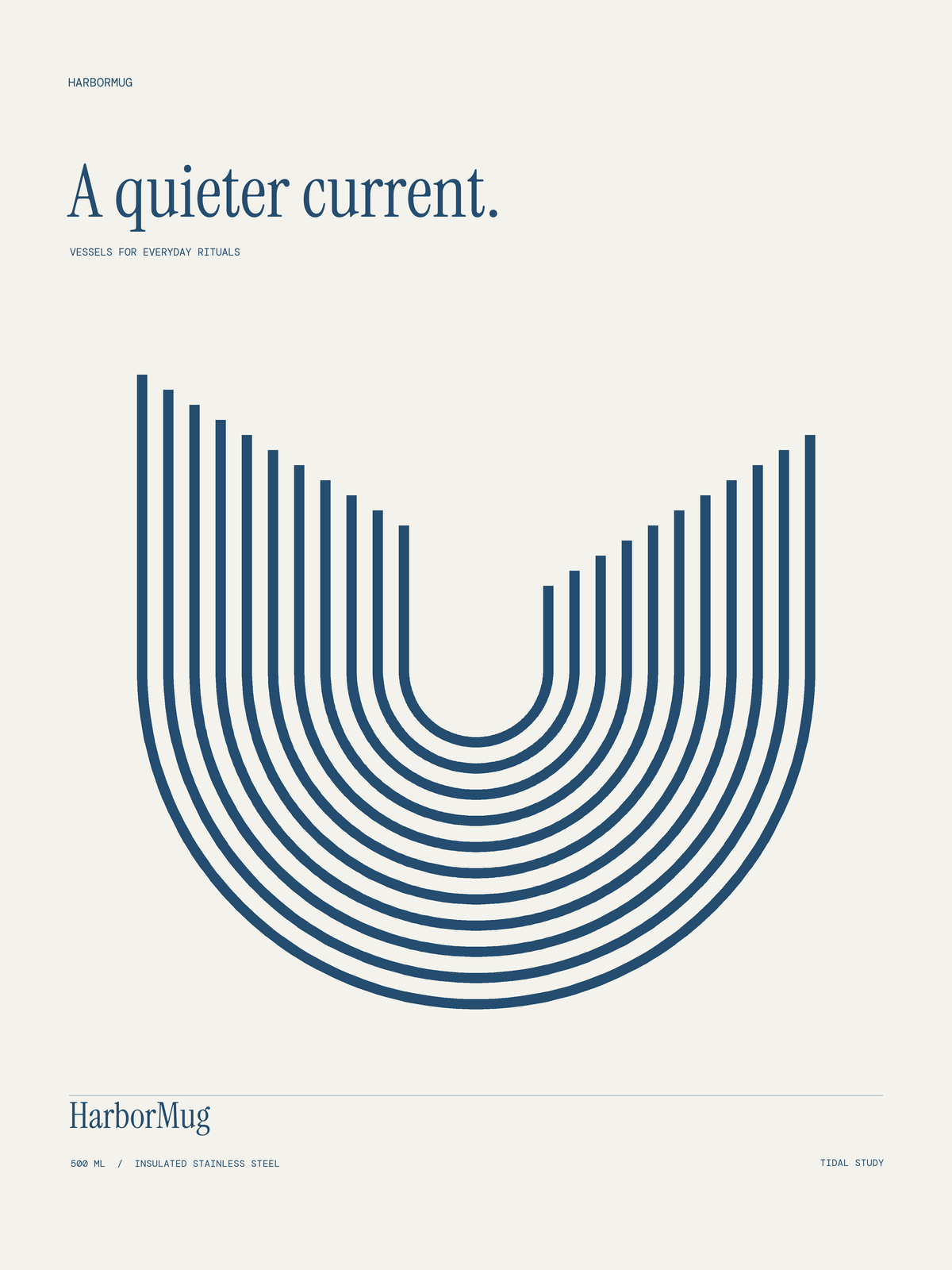
案例中的商家经营资料为模拟数据;涉及网站检查时,报告中的页面观察来自所列公开网址。
它不是 Canva 集成或可编辑店铺搭建器。需保留随包字体及各自许可,产出仍需目视检查。
核对源码及随包文件:GitHub dbd4588f9e10。本次为静态审查,不代表已完成安装运行或业务效果测试。
使用获授权输入,不把密钥贴入提示词。采用前检查面向客户的声明、计算、代码改动及任何拟议的外部操作。
先制定视觉设计理念,再转化为原创 PNG 或 PDF 静态作品。流程强调构图、字体、精简文字和最后一轮精修。
按实际 Agent 选择方式,安装完整包,不要只复制页面中的 SKILL.md。 视觉简报、尺寸、目标受众、获批文字与素材,以及能生成文件的创意 Agent。 开启新 Agent 会话,明确要求使用 canvas-design。先用小型样本尝试下方一个场景,并检查输出。
根据品牌简报制作上市海报;设计简洁的商品系列 PDF;精修间距、字体和视觉层级
它不是 Canva 集成或可编辑店铺搭建器。需保留随包字体及各自许可,产出仍需目视检查。
核对源码及随包文件:GitHub dbd4588f9e10。本次为静态审查,不代表已完成安装运行或业务效果测试。
核对源码及随包文件:GitHub dbd4588f9e10。本次为静态审查,不代表已完成安装运行或业务效果测试。
暂无评论。